.svg?w=300&h=58)
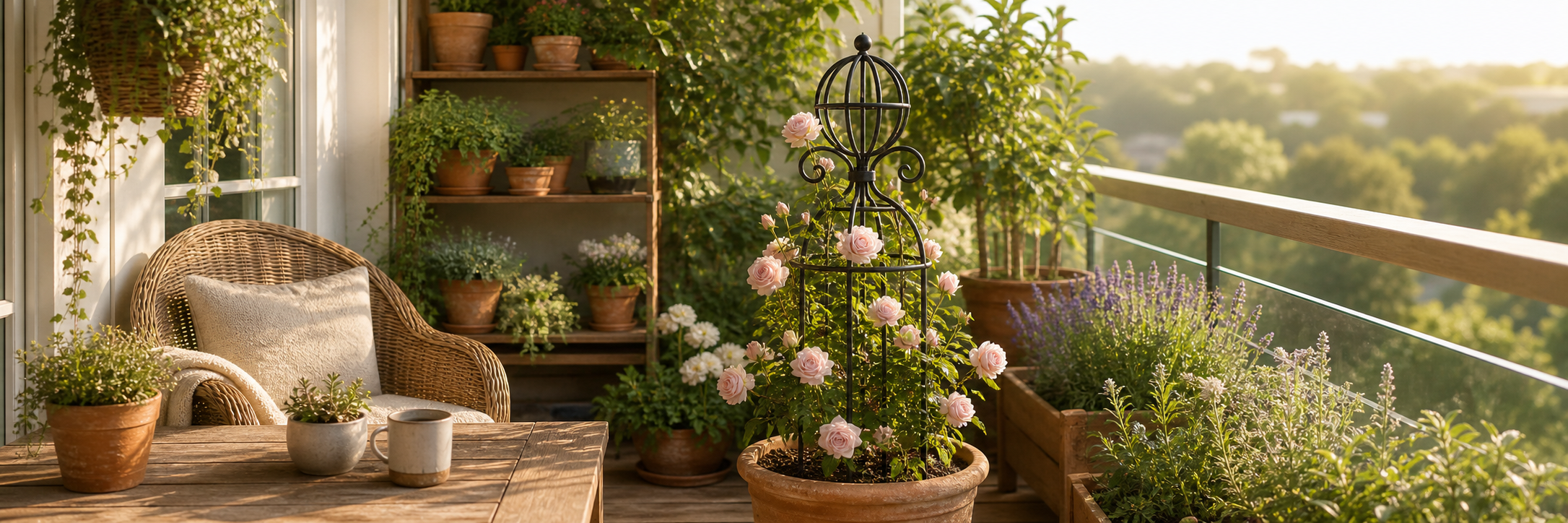
A small outdoor area can still become a useful, calming garden. The key is to plan for the space you actually have: measure the light, protect walking room, choose containers with drainage, and give climbing or top-heavy plants the right support. These small-space gardening ideas work for balconies, patios, porches, windows, and compact indoor plant corners.
Quick answer: Start with one sunny or bright corner, group three to five compatible plants, and use vertical support to move growth upward instead of across the floor. Leave a clear route for watering and daily use. A small garden feels more intentional when every pot has a purpose.
Start with light, water, and access
Before buying another plant or container, observe the space in the morning, around midday, and again in the late afternoon. Buildings, balcony rails, trees, and neighboring walls can change the amount of direct light throughout the day. Use those observations—not the direction the balcony faces alone—to decide which plants belong there.
Next, think about watering. Containers need drainage holes, and balconies or indoor corners usually need saucers to protect the surface below. Make sure excess water can be emptied easily rather than left standing. If the garden is elevated, check building rules and weight limits before adding large planters or heavy materials.
Finally, preserve access. Keep doors, vents, drains, and the main walking path clear. A garden that blocks the route to a chair or makes watering difficult will soon feel like clutter. One well-planned plant zone is usually more enjoyable than pots scattered across every available edge.
Choose a support system that matches the plant
Plant supports are not only decorative. They can guide new growth, keep foliage off the floor, reduce tangling, and help a compact planting look organized. The best support depends on the plant’s mature habit: climbing stems need places to attach or be tied, while spreading flowers often need a ring or grid that holds the whole clump together.
| Space or plant | Main goal | Useful support | Good fit for |
|---|---|---|---|
| Balcony container | Grow upward | Obelisk or narrow trellis | Climbing vines and trained roses |
| Indoor pot | Guide young stems | Compact decorative trellis | Pothos, hoya, and other manageable climbers |
| Flower container | Hold a full clump | Ring or grid support | Peonies and other plants that tend to lean |
| Narrow patio edge | Create height without bulk | Slim vertical frame | Seasonal climbers and focal plants |
Install support early, while stems are still flexible and the roots have not filled the container. This makes training easier and reduces the chance of damaging mature growth. Check ties regularly and keep them loose enough to allow the stem to expand.
Grow upward, not outward
Vertical gardening is one of the most effective ways to add impact without taking over the floor. A narrow trellis inside a substantial pot creates height and gives the eye a clear focal point. It can also make a balcony or patio feel more like a designed outdoor room.
Choose a support that is tall enough for the plant’s expected growth but proportionate to the container. Push the legs firmly into the potting mix without forcing them through dense roots. As the plant grows, guide stems around the structure or attach them with soft garden ties. Do not wrap stems so tightly that air movement is restricted.

For a coordinated look, repeat one material or color. A black metal support, for example, can visually connect dark planters, railings, or outdoor furniture. Browse the MOUGIGI plant trellis collection to compare shapes before choosing one for your container.
Treat the balcony like a room
A small garden becomes more inviting when it has a simple layout. Begin with a focal point, such as a tall trained plant. Add a medium-height container beside it and a lower pot near the front. This three-level arrangement creates depth without requiring many plants.
Limit the palette to two or three container finishes and repeat them. The same principle applies to flowers and foliage: a smaller number of repeated colors usually looks calmer than many unrelated accents. If you have room for a chair or small table, position the plants where they can be seen from that seat—not only from outside the balcony.
Use the wall or railing carefully, and only with secure hardware suitable for the surface. Nothing should be able to fall beyond the balcony. Keep mature plant size in mind so foliage does not eventually block doors, drains, or neighboring spaces.
Give indoor plants a defined shape
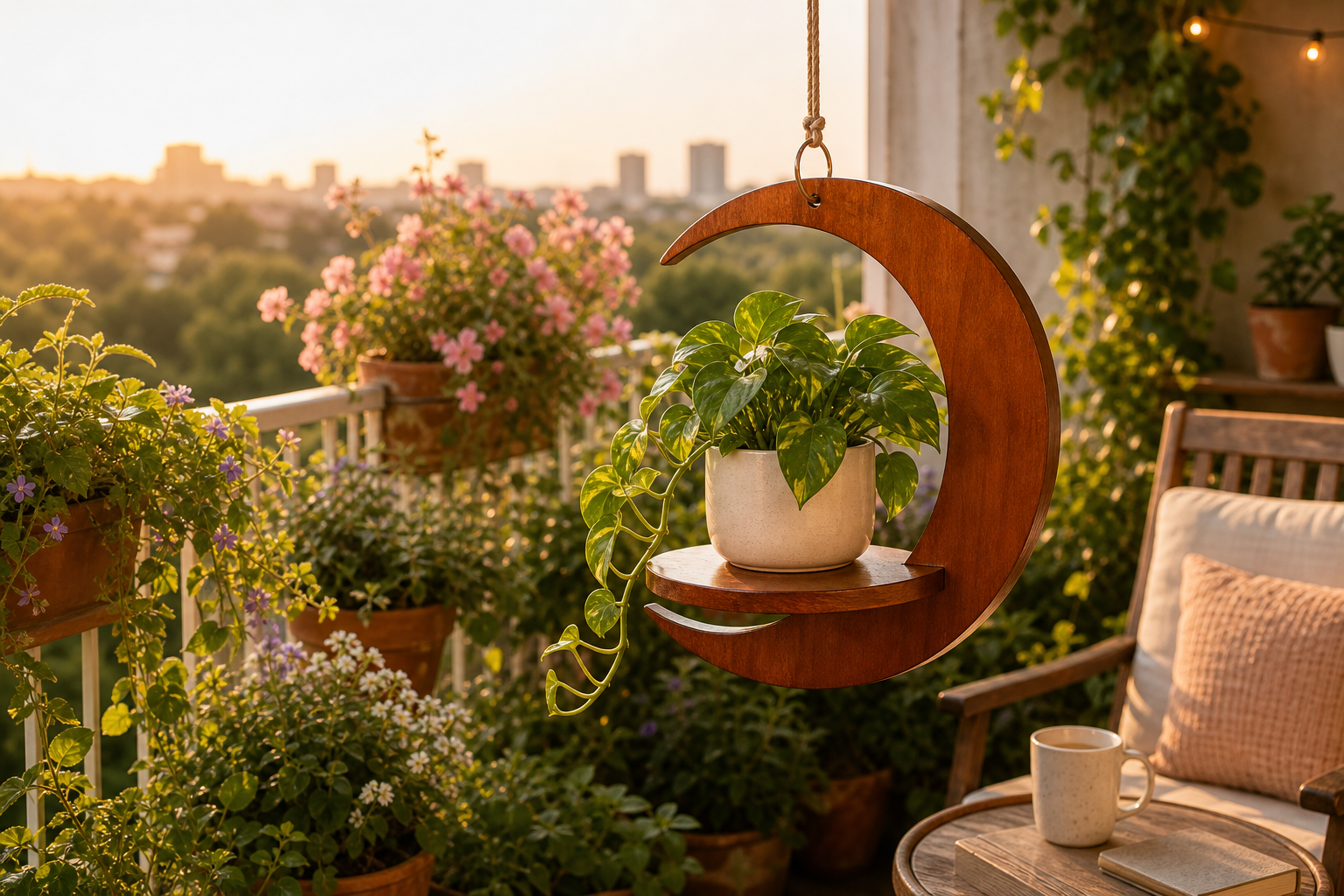
Small-space gardening also applies indoors. Vining houseplants can quickly spread across shelves and windowsills, making a compact room feel untidy. A small decorative trellis brings the growth back into the footprint of the pot and turns the plant into a vertical accent.
Place the support when repotting or while the plant is young. Gently guide a few established stems first, then allow new growth to follow. Rotate the pot periodically if the plant leans toward the window, and choose a location that meets its light needs rather than placing it solely for decoration.
.png?w=1254&h=1254)
Support flowers before they begin to flop
Some flowering plants hold themselves well early in the season and lean later, especially after producing larger blooms or encountering rain. Adding support before the plant becomes top-heavy lets stems grow through the structure naturally and makes the hardware less noticeable.
For a full, clumping plant, a ring or grid support is often more useful than a narrow trellis. Choose a diameter that allows some room for growth. Position it low at first, then adjust it as the plant develops if the design allows. The purpose is to support the natural form, not compress the stems into a tight bundle.
.png?w=1254&h=1254)
Build one plant corner instead of scattering pots
If a small balcony or room still feels crowded, reduce the number of planting zones. Gather compatible plants near the best available light and vary their height with sturdy stands, shelves, or vertical supports. Keep plants with similar watering needs close together so care is simpler.
Use negative space intentionally. A visible section of wall or floor gives the eye a place to rest and makes the plants you keep look more important. This is one reason a single tall trellis can be more effective than adding several small decorative objects.
A simple 30-minute setup
- Clear the area. Remove empty pots, damaged accessories, and anything that blocks access.
- Measure the footprint. Note the usable width, depth, and maximum comfortable height.
- Choose one focal plant. Place it where its light needs and mature size can be accommodated.
- Add the right support. Match an obelisk, compact trellis, or ring to the plant’s growth habit.
- Group supporting plants. Add only enough smaller containers to create balance.
- Test the route. Walk through, open the door, water each pot, and confirm that drainage is manageable.
Live with the arrangement for a few days before adding more. The empty space may turn out to be exactly what makes the garden functional.
Common small-space gardening mistakes
- Choosing plants before checking light. A beautiful plant cannot compensate for unsuitable growing conditions.
- Ignoring mature size. Plan for the plant it will become, not only the pot you bring home.
- Using containers without drainage. Select appropriate pots and protect the surface underneath.
- Installing support too late. Early support is easier to place and easier for new growth to follow.
- Filling every surface. Leave room to water, prune, clean, sit, and move safely.
- Mixing too many styles. Repeating a few materials and colors creates a more cohesive result.
Frequently asked questions
What can I grow in a small balcony garden?
Choose plants according to the light, temperature, wind exposure, container size, and local climate in your exact space. Herbs, compact flowers, foliage plants, and trained climbers can all work when their individual growing needs are met.
How do I make a small garden look bigger?
Keep the floor path visible, group pots rather than scattering them, repeat a limited color palette, and use vertical elements to draw the eye upward. A clear focal point also makes the layout feel deliberate.
When should I add a trellis or plant support?
Add it at planting time, during repotting, or early in the growing season. It is usually easier to train flexible new growth than to untangle and reposition mature stems.
Can I use a garden trellis indoors?
Yes, if its scale suits the pot and the plant. Make sure the support is stable, keep it away from fragile surfaces, and continue to prioritize the plant’s light and care requirements.
How many pots should a small balcony have?
There is no universal number. Start with a focal plant and two to four supporting containers, then assess the walking route, watering access, drainage, and visual balance before adding more.
Make a small garden feel intentional
Small-space gardening is not about squeezing a full backyard into a few square feet. It is about choosing what matters most and giving it room to work. Start with the conditions, organize plants into one useful zone, and select support that fits each plant’s natural growth. The result can feel generous even when the footprint is modest.
Ready to plan your vertical garden?
Explore plant trellises for compact containers, climbing houseplants, and garden flowers, or browse all MOUGIGI garden supplies.