.svg?w=300&h=58)
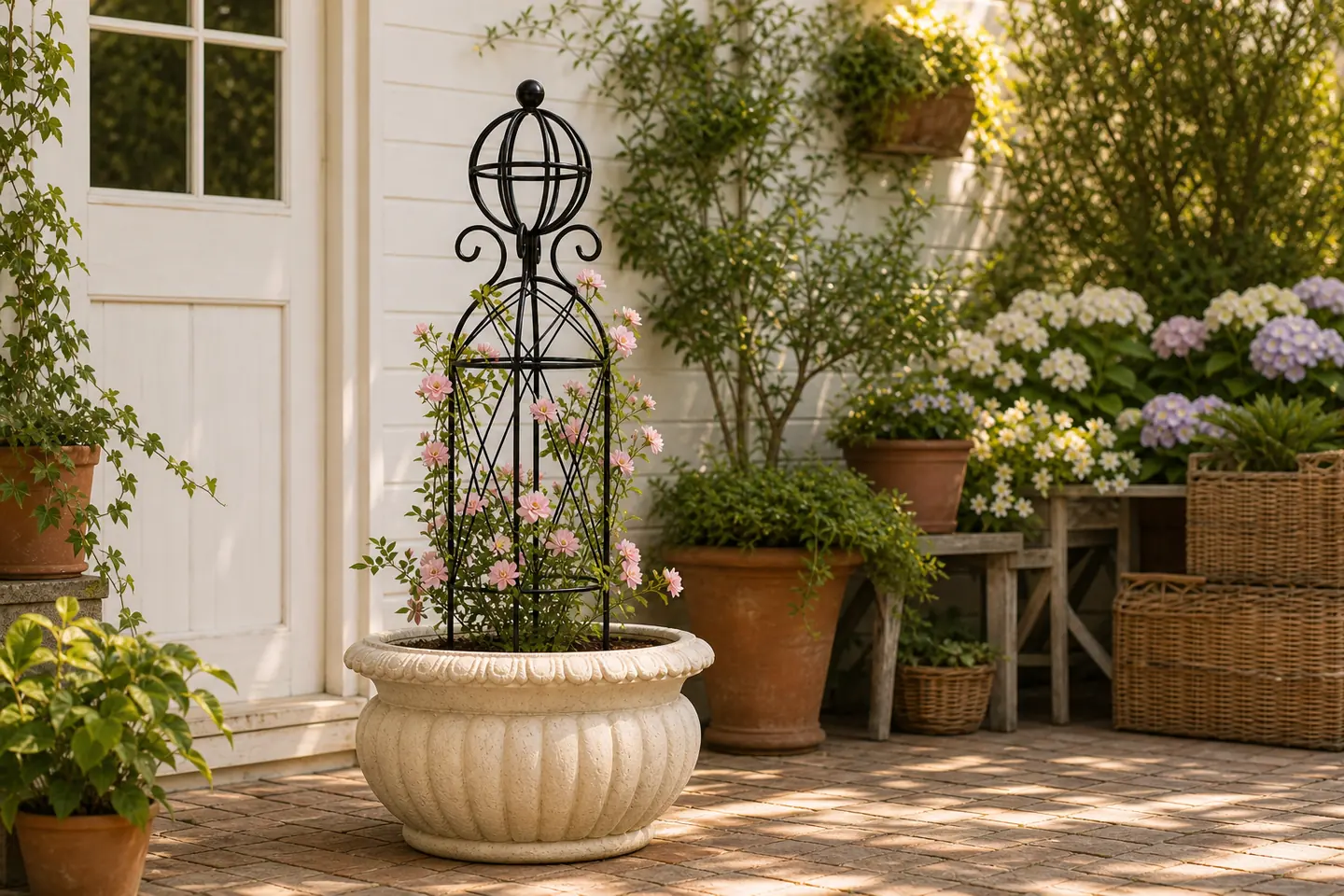
An obelisk trellis can turn one ordinary planter into a vertical garden. It gives climbing plants a clear path upward, adds structure before the foliage fills in, and creates height without taking up more floor space.
But the prettiest trellis is not always the right trellis.
If it is too tall for the container, the whole planting can become top-heavy. If it is added after the roots are established, the legs may damage the root ball. If the plant is more vigorous than the frame, a setup that looked balanced in spring can lean or tip by midsummer.
The best choice is the one that works as a system: plant, planter, trellis, and placement.
The quick answer
Choose an obelisk trellis with a base that fits comfortably inside the planter, enough height for the plant’s expected growth, and a frame strong enough for the mature foliage—not just the young plant you see today.
For the most stable result:
- install the trellis before planting the vine;
- remember that part of its total height will sit below the soil;
- use a wider, heavier container for taller supports;
- choose a compact climber for a compact planter;
- and place tall container arrangements away from strong, funneling wind.
That last point matters more than many shoppers expect. As vines fill the frame, leaves catch wind like a sail. The plant gets heavier at the same time the arrangement becomes easier for a gust to push.
Start with the plant, not the trellis
An obelisk should match the way a plant grows.
Some vines naturally twine around narrow supports. Others climb with tendrils. Plants such as climbing roses do not attach themselves in the same way and usually need loose ties and regular training. Even within one plant group, a compact patio variety and a vigorous full-size variety can require very different amounts of space.
Before choosing a trellis, check:
- the plant’s expected mature height and spread;
- whether it twines, clings, scrambles, or needs tying;
- whether the variety is recommended for containers;
- how heavy its foliage, flowers, or fruit may become;
- and how much sun, soil volume, and root room it needs.
This prevents a common mismatch: buying a small decorative obelisk for a vine whose mature growth needs a much larger support.
Compact clematis, jasmine, ivy, morning glories, nasturtiums, and other lightweight or container-suitable climbers can work beautifully with an obelisk. Small roses can also be trained around a frame, but the stems need gentle tying rather than being forced through narrow openings.
The variety still matters. “Clematis” or “rose” alone is not enough information—always check the label for the mature size of the specific plant.
Match three dimensions: planter, trellis, and mature plant
Most people compare the trellis height with the plant height. A better decision uses three dimensions.
1. Base width
The trellis legs should fit inside the planter without pressing hard against the pot wall or forcing you to place them through the center of an established root ball.
A wider trellis base generally needs a wider planter. Do not assume that a tall, narrow-looking frame will fit every pot; the leg spacing at soil level is the measurement that matters.
2. Visible height
The advertised height is the total product height, not necessarily the height that will remain above the soil.
Some of the lower legs must be inserted deeply enough to hold the frame steady. The exact depth depends on the design, soil, planter, plant weight, and exposure. This means the plant receives less usable climbing height than the number printed on the product page.
Practical insight: choose for the height you will see after installation, not only the height listed before installation.
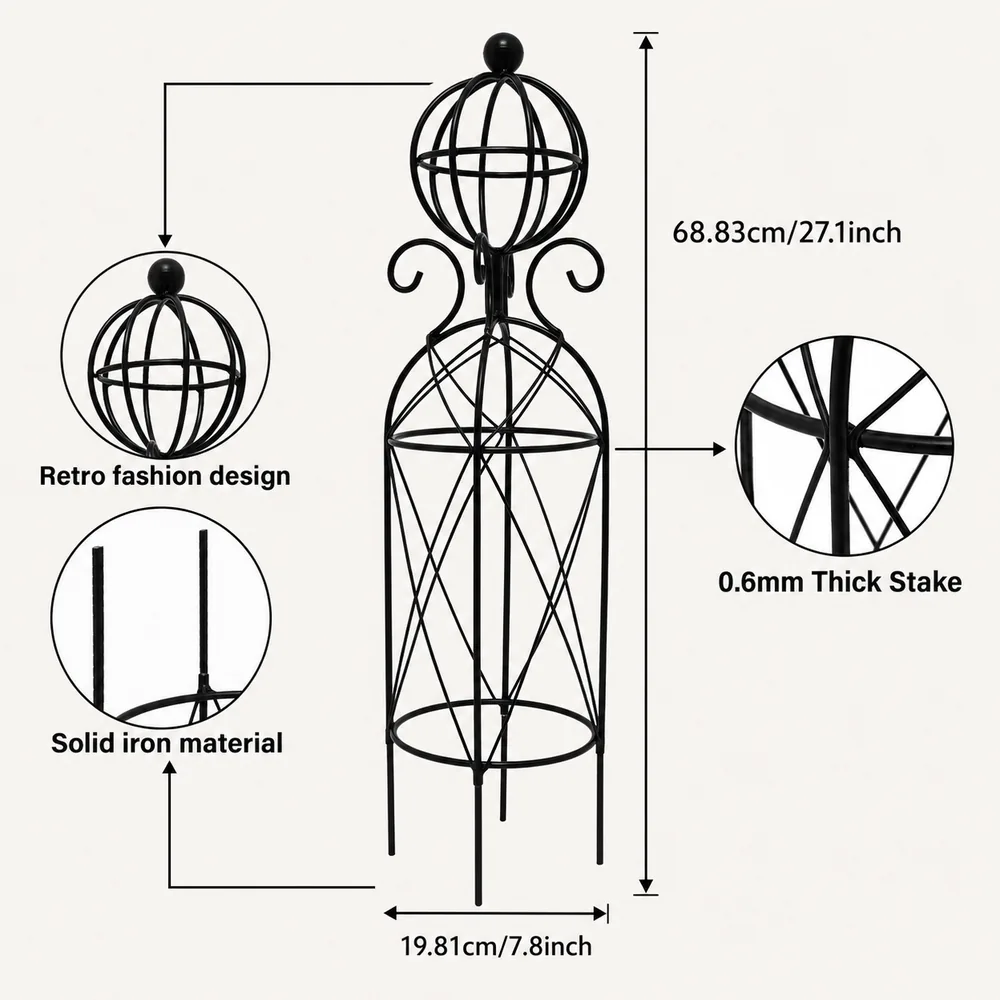
Check the base width and remember that part of the listed height will sit below the soil.
3. Mature top weight
A young vine may weigh very little. Months later, the same frame may carry dense leaves, flowers, wet foliage after rain, or fruit.
The taller and fuller the planting becomes, the more leverage it places above the planter. This is why a lightweight, narrow pot can feel stable at planting time and still tip later in the season.
What size obelisk trellis works best in a pot?
There is no universal trellis-to-pot formula because plant vigor, pot shape, material, soil volume, insertion depth, and wind exposure all change the result. The ranges below are a practical starting point rather than a guarantee.
| Trellis height | Often works best for | Watch for |
|---|---|---|
| About 27–30 inches | Balcony pots, compact patio planters, young or lightweight climbers, decorative container displays | May be too short for vigorous or full-size vines |
| About 35–41 inches | Larger patio planters, moderate climbers, flowering container displays | Needs more soil volume and a stable pot shape |
| About 47 inches and taller | Large planters, garden beds, taller vines, roses, and statement plantings | Greater wind load; may require anchoring or a more sheltered position |
Best for: Balcony pots, compact patio planters, young or lightweight climbers, and decorative container displays.
Watch for: May be too short for vigorous or full-size vines.
Best for: Larger patio planters, moderate climbers, and flowering container displays.
Watch for: Needs more soil volume and a stable pot shape.
Best for: Large planters, garden beds, taller vines, roses, and statement plantings.
Watch for: Greater wind load; may require anchoring or a more sheltered position.
For a small planter or balcony corner, a compact frame such as MOUGIGI’s 27.1-inch black metal obelisk trellis keeps the scale controlled while still adding a vertical line.
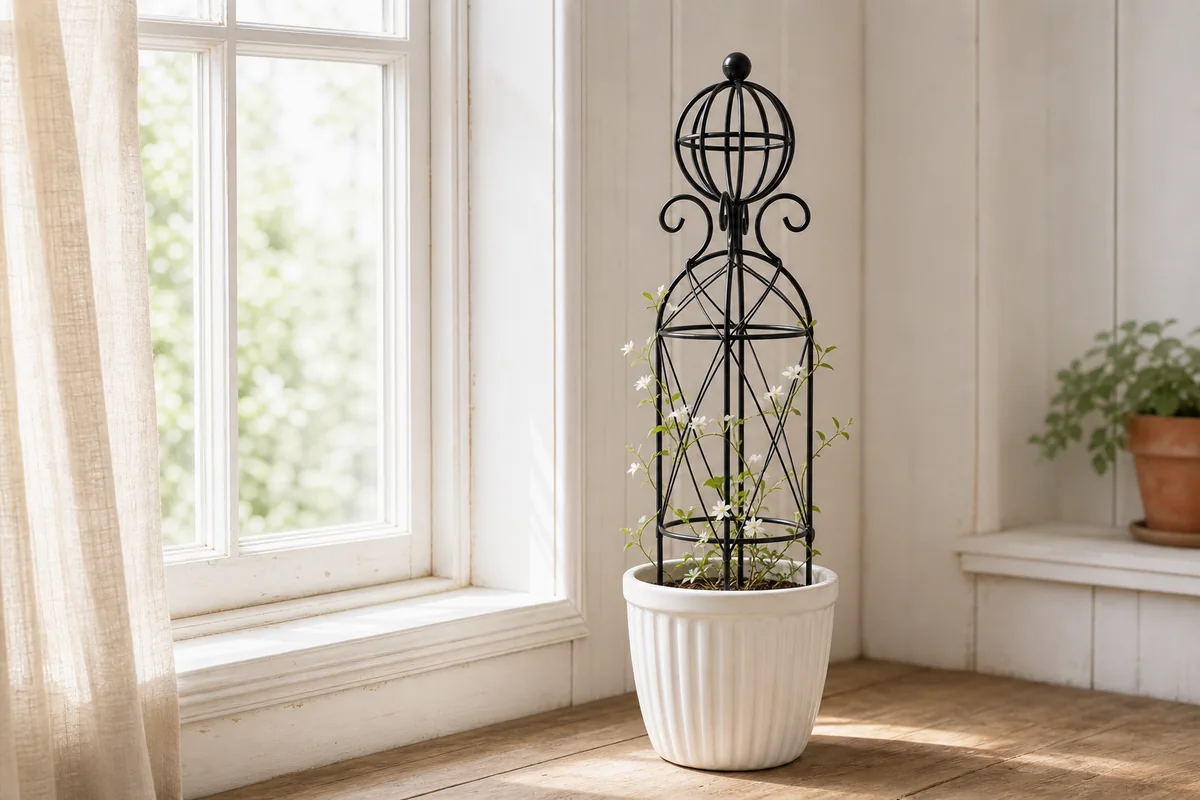
A compact obelisk adds height without overwhelming a small planter or sheltered corner.
For a larger container or outdoor planting area, the 40.5-inch metal garden obelisk offers more climbing room and a wider visual presence. Its larger scale also means the planter and placement need more attention.
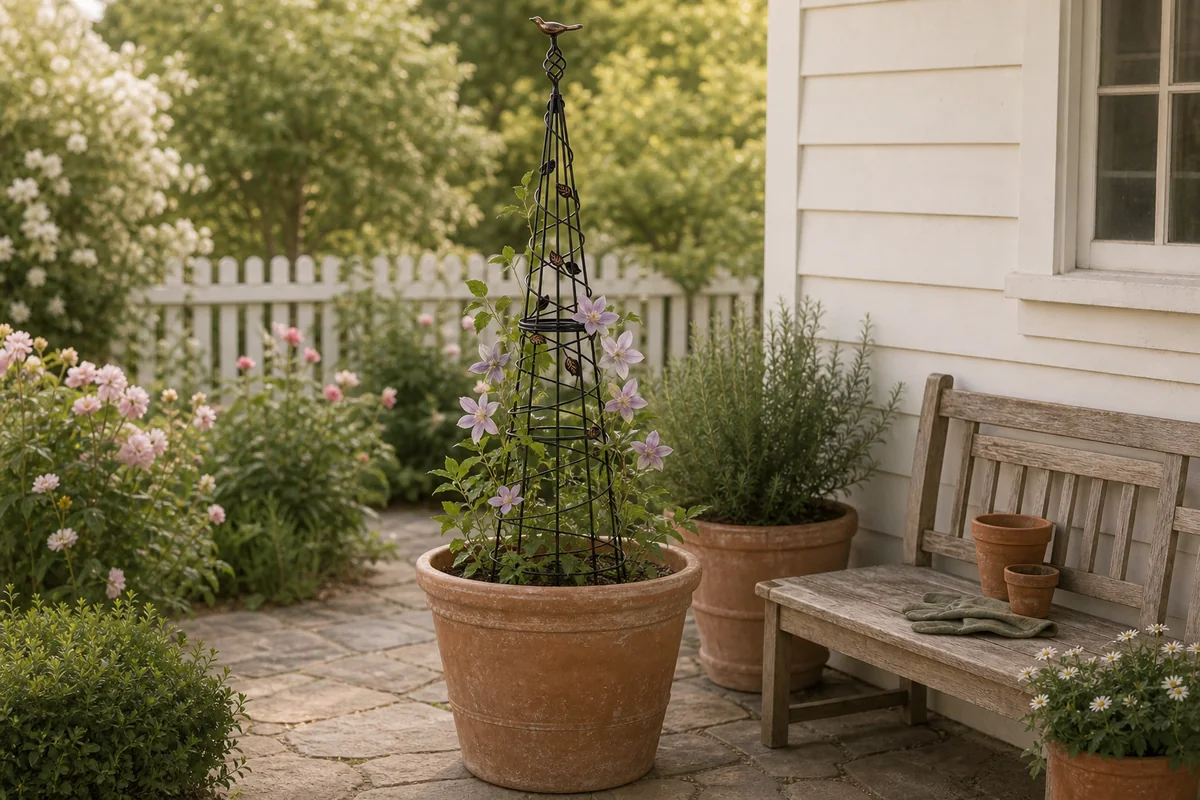
A taller frame provides more climbing room, but it also asks more of the planter and its placement.
If you are still comparing shapes and heights, browse the full MOUGIGI plant trellis collection before deciding.
Why installing the trellis early matters
The easiest time to place an obelisk is before the container is fully planted.
Early installation lets you:
- position the legs without forcing them through a mature root system;
- check that the frame stands straight;
- add soil around the legs for more even support;
- place the vine close enough to begin training naturally;
- and confirm that the entire arrangement is stable before growth adds weight.
The University of Illinois Extension similarly recommends putting the support into a container before planting the vine, so the structure is already waiting for the plant as it begins to climb.
If the plant is already established, do not push the trellis down blindly. Test the leg positions gently near the outer area of the root ball. Stop if you meet strong resistance. For a root-bound plant, repotting and installing the support at the same time may be safer than forcing a frame into the existing container.
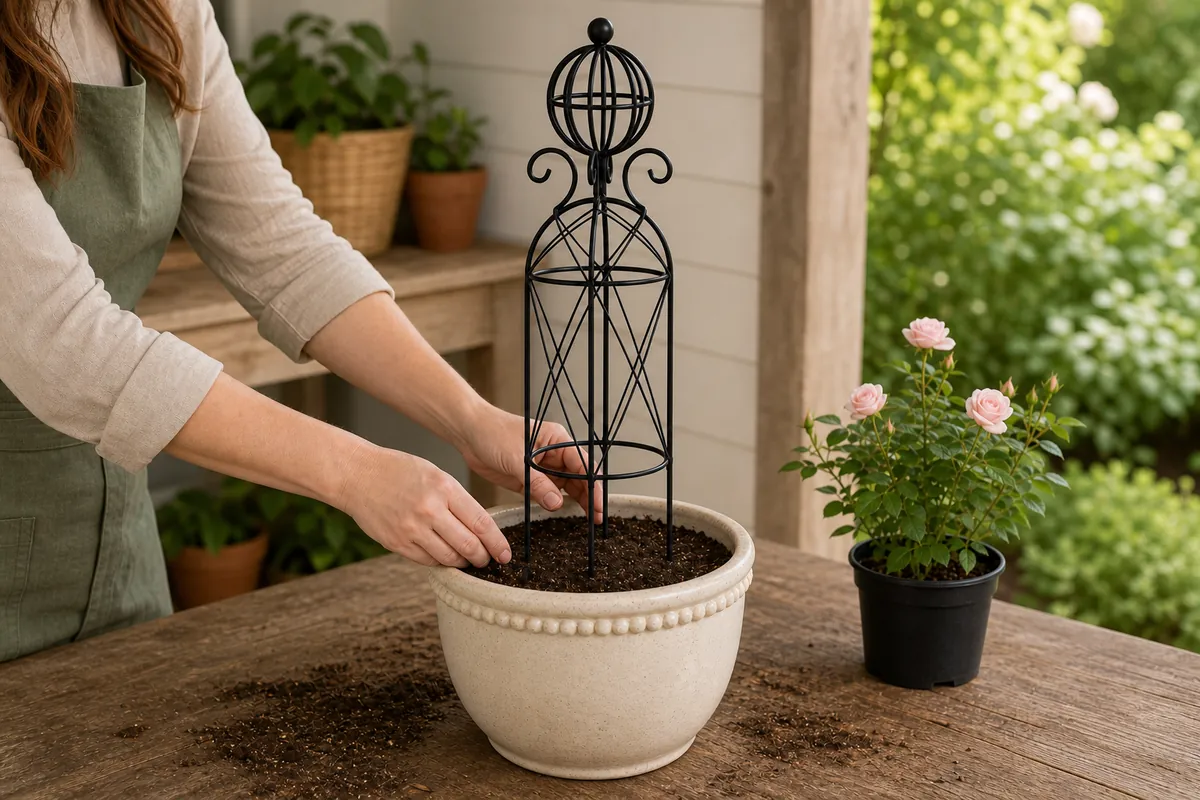
How to install an obelisk trellis in a planter
Step 1: Test the empty arrangement
Set the trellis inside the empty pot. Confirm that all legs fit, the base is centered, and there is room for the plant.
Step 2: Check the finished height
Estimate how much of the lower frame will sit in the soil. Then look at the remaining height in relation to the pot, nearby furniture, balcony rail, or walkway.
Step 3: Add the trellis before the plant
Partially fill the container, position the trellis, and add potting mix evenly around the legs. Follow the planting requirements for your specific plant rather than using one soil mix for every vine.
Step 4: Check for movement
Press the soil gently and test the frame with a light shake. It should not wobble loosely inside the planter. Do not rely on the plant’s roots to correct an unstable frame later.
Step 5: Plant and train loosely
Place the plant where its stems can reach the frame without sharp bending. Use soft garden ties when help is needed, leaving room for stems to thicken.
Step 6: Recheck after watering
Watering can settle the potting mix and reveal movement around the legs. Straighten and stabilize the frame before the vine begins wrapping around it.
Five reasons a planter trellis tips—and how to prevent them
1. The pot is too light or narrow
Tall growth raises the center of gravity. Illinois Extension notes that small containers can become top-heavy and that exposed balconies, decks, and rooftops deserve extra attention because of wind.
Choose a stable pot shape with enough volume for both the roots and the support. A decorative outer planter can also add weight, but it must not block drainage.
2. The plant is too vigorous for the setup
A compact trellis cannot turn a vigorous climber into a compact plant. If the variety wants to outgrow the frame, repeated pruning and tying may become necessary, and the mature weight can overwhelm the container.
Match the plant first. If the vine is large, move up to a stronger support and a larger container—or plant it in the ground.
3. The trellis was installed too late
Late installation makes it difficult to achieve enough insertion depth without disturbing roots. It also leaves you trying to weave mature stems through a structure that should have guided them from the beginning.
Install early whenever possible.
4. The placement creates a wind tunnel
A balcony corner can look protected but still funnel wind between walls. Oklahoma State University Extension advises using a very heavy container, or adding weight, when a trellis increases the risk of a container tipping in windy conditions.
Move tall container plantings to a more sheltered position during severe weather. If the location is consistently exposed, use a shorter structure or a properly secured support.
5. Wet foliage changes the load
Rain adds weight, and dense leaves increase wind resistance. Recheck the planter after storms and as the plant fills out. Seasonal maintenance is part of the setup; stability at planting time is not a permanent guarantee.
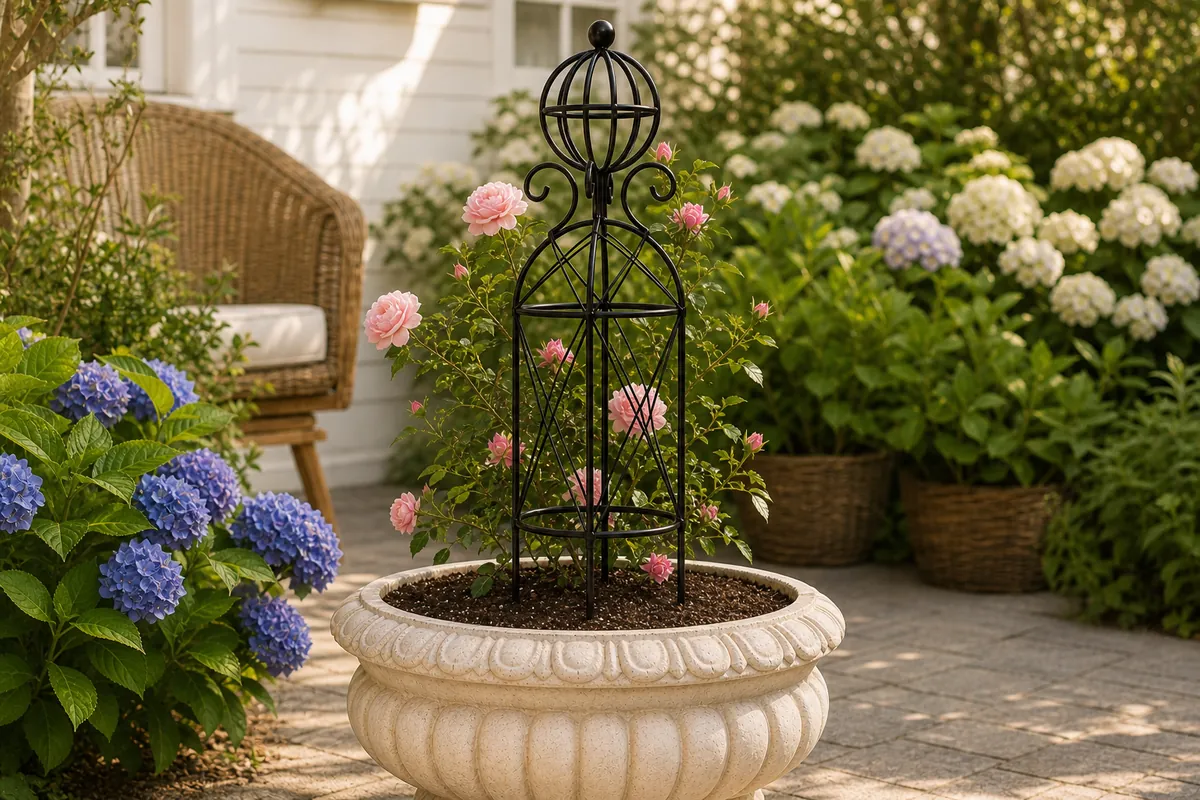
The lower legs need enough contact with the soil to keep the frame steady as the plant fills out.
How to train a climbing plant without damaging it
Begin while the stems are young and flexible.
- Guide twining stems in their natural direction around the frame.
- Use soft ties for plants that need help attaching.
- Keep ties loose enough for stem growth.
- Spread growth around more than one side of the obelisk instead of loading a single face.
- Check ties every few weeks during active growth.
- Remove dead or tangled material according to the care needs of the specific plant.
Avoid pulling a stem into a tight spiral simply to fill the trellis quickly. The goal is to guide new growth, not force older stems into a shape they cannot hold safely.
A better way to choose: plan for midsummer, not planting day
The most useful question is not:
Which trellis looks best beside this young plant?
It is:
Will this planter, trellis, and plant still work together when the frame is full?
Picture the arrangement after the plant reaches the top, after watering, and on a windy afternoon. Check the plant’s mature size, subtract the inserted portion from the trellis height, and decide whether the pot has enough width and weight for the finished planting.
That small shift—from styling the plant you have today to planning for the plant it will become—is what prevents most avoidable problems.
For more ideas on using vertical structure without crowding a balcony or patio, read Small-Space Gardening Ideas for Balconies & Patios.
Frequently asked questions
Can you put an obelisk trellis in a pot?
Yes. An obelisk can work well in a pot when its base fits the container, the pot is stable enough for the finished height, and the chosen plant has suitable root room. Install the frame early and account for wind exposure.
Should I put the trellis in before or after planting?
Before planting is usually easier and safer. It lets you position the legs without forcing them through an established root system and gives the vine support from the start.
How do I stop a trellis from falling over in a pot?
Use a wider, heavier container; make sure the legs are inserted securely; match the trellis to the plant’s mature weight; and avoid exposed, windy placement. Recheck the setup as foliage fills the frame.
How tall should an obelisk trellis be?
Choose based on the plant’s mature size and the height that will remain above the soil after installation. Compact 27–30-inch obelisks suit many small container displays, while taller frames need larger, more stable planters and may be better for bigger vines or garden beds.
What plants grow well on an obelisk trellis in a container?
Container-suitable clematis, jasmine, ivy, morning glories, nasturtiums, and compact roses are common options. Suitability depends on the exact variety, climate, light, and container size, so check the plant label before pairing it with a support.
Final takeaway
A good obelisk trellis does more than make a planter look finished. It gives the plant an appropriate structure, protects the roots from late installation, and keeps the whole arrangement balanced as growth becomes taller and heavier.
Choose for the mature plant. Measure the base, not only the height. Install early. Plan for wind. Then let the trellis become part of the garden rather than a structure the plant has to fight.